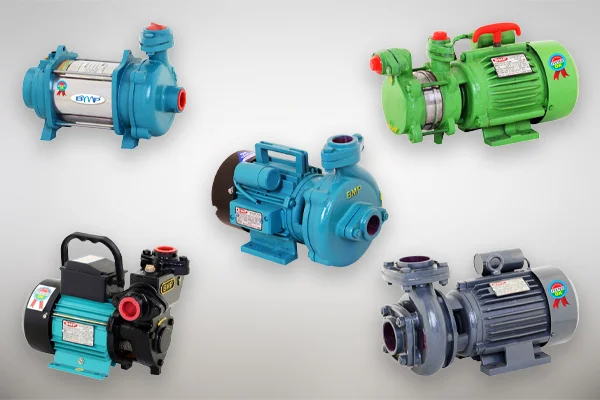
Complete Guide to Choosing the Right Pump for Any Project
When shopping for a pump, if you ignore the dynamics that physics and chemistry bring into efficient functionality and real-world standards, you’re not making a smart purchase—you’re setting yourself up for failure. The idea that you can match pipe diameter to horsepower and walk away thinking you’ve solved the problem is simply not true.
If you calculate vertical lift but overlook the “invisible” friction from multiple elbows and long pipe runs, what you end up with is a pump that sounds like it’s working… but doesn’t actually move water where it needs to go.
- Mastering the System Curve and Total Dynamic Head
The most common mistake in project management is failing to account for “Total Dynamic Head” (TDH). This isn’t just how high you are pumping water; it’s the sum of vertical lift plus the invisible “drag” created by every pipe fitting, elbow, and valve in your line. If you ignore this friction, your pump will underperform or burn out.
Professional consultation from Pumpbiz water equipment and parts suppliers help you map your “System Curve” against the “Pump Curve.” This ensures the motor operates in its “Best Efficiency Point” (BEP), where vibration is lowest and longevity is highest. It’s the difference between a “working” system and a “mastered” one.
- Metallurgy and Material Compatibility
These have a direct effect on service life and maintenance costs of your machine. Since not all fluids are created equal, neither are all the pumps designed to serve you perfectly. Using a cast-iron pump for chlorinated pool water or mildly acidic well water is a recipe for rapid corrosion.
Expert selection requires a deep dive into material science:
- Thermoplastic vs. Alloy: Choosing light-weight non-corrosives for chemical transfer.
- Elastomer Selection: Ensuring internal O-rings won’t swell when exposed to specific oils or cleaners.
- Impeller Geometry: Choosing “vortex” designs for solids-handling or “enclosed” designs for pure pressure.
Selecting the right materials turns a potential point of failure into a long-term structural asset for your project.
The Evolution of Intelligent Control Systems
In the modern era, a pump shouldn’t be a “dumb” machine that just spins. The integration of digital controllers has revolutionized project outcomes. We are now seeing “Dry-Run Protection” and “Auto-Reset” features that save thousands in repair costs.
- Smart Sensors: Detecting when a source tank is empty to prevent air-lock.
- Phase Protection: Ensuring electrical surges don’t fry the motor windings.
- Remote Telemetry: Monitoring flow rates from a smartphone.
In the pump industry, this suite of technologies offer electronic pump protection , thus enhancing intelligent fluid management.
- Solids-Handling and Maceration Strategy
If your project involves anything other than crystal-clear water, you are in the realm of “solids handling.” Standard pumps will clog instantly on hair, string, or organic debris. The specialized approach involves:
- “Grinder Pumps” that act like industrial garbage disposals before the fluid enters the volute.
- Shredding Action: This is the core mechanical function of a grinder pump in a wastewater management project. It represents a high-torque industrial processor; unlike a standard centrifugal process.
- Non-Clog Impellers: Designed with wide passages to let debris pass through safely.
These macerating pump systems are “industrial processors” designed to handle the messy, high-friction reality of raw sewage and gray water.
In essence, when buying a pump, the predictability factor is what separates a controlled system from a costly gamble. By accounting for fluid chemistry, internal friction, and real-world operating behavior, you eliminate the “surprises”—floods, burnouts, and clogs—that quietly turn a project into a liability.
Pump experts don’t guess; they leverage a comprehensive understanding of system dynamics—flow curves, resistance, material compatibility—to structure solutions that actually perform under pressure. Done right, this doesn’t just solve a problem—it creates a “force multiplier” effect on your entire project, where efficiency, reliability, and longevity all rise together.


